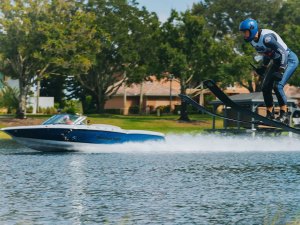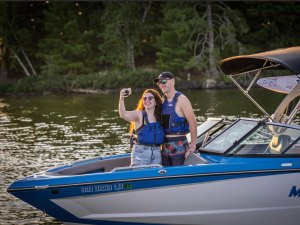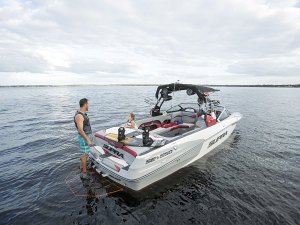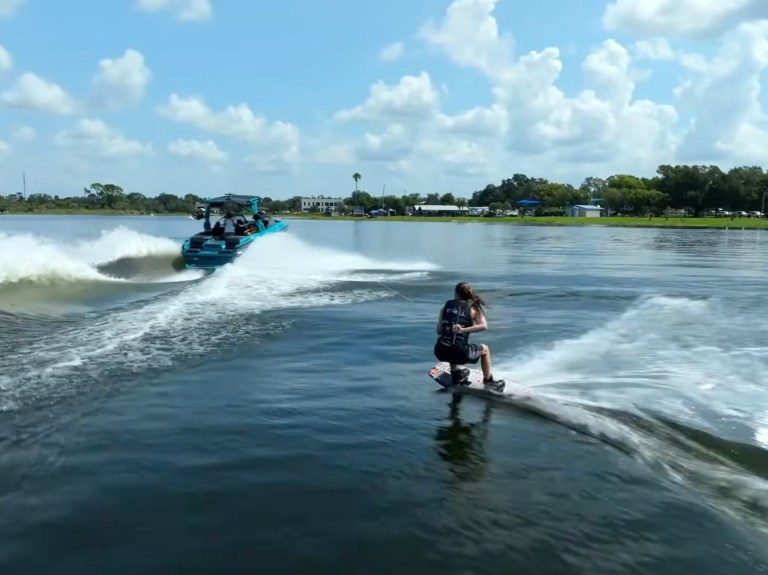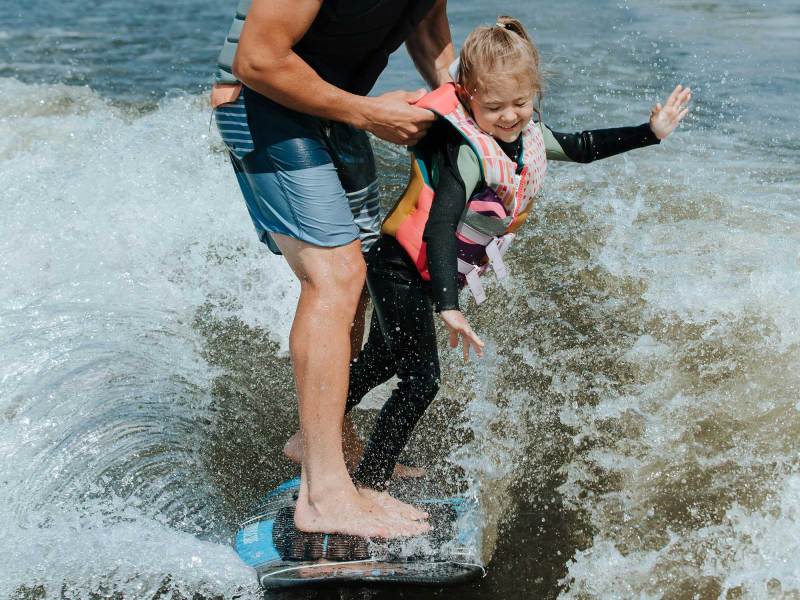
Wakeboarding has always been about the joy of movement. The speed of the boat, the tug of the handle, the thrill of acceleration as your edge locks in. Riders launch off wakes, spin, grab and take the impact of every landing. The equipment that makes those tricks possible has evolved dramatically over the years—from boards and bindings to boats and ballast systems.
Now personal flotation devices are entering a new era, too.
The new Level 50 personal flotation device standard is designed to give wake athletes a new option: a lightweight, low-profile buoyancy aid that provides flotation while allowing the freedom of movement that today’s riders demand.
Approved by the U.S. Coast Guard in 2025, Level 50 PFDs provide at least 50 newtons of buoyancy—about 11 pounds of flotation—while emphasizing comfort, mobility, and activity-specific performance. Although many riders will call them “Level 50 life jackets,” they are technically classified as buoyancy aids because they are designed for active swimmers rather than floating an unconscious person.
Finally, A Legal Alternative to the “Outlaw Vest”
For years, many wake athletes have chosen lightweight competition vests because traditional life jackets could feel bulky and restrictive. These low-profile vests allow riders to rotate, twist, grab, and move naturally while performing tricks. The problem? Competition vests are not built to U.S. Coast Guard standards, which means they don’t get the USCG stamp of approval.
Known throughout the wake community as “comp vests” or “outlaw vests,” these products are built around performance and comfort but typically lack the certification required to meet U.S. Coast Guard standards. Wearing one may feel right on the water, but it does not satisfy federal carriage requirements.
The upcoming generation of U.S. Coast Guard-approved Level 50 PFDs is designed to change that. These new devices aim to provide the low-profile fit and mobility riders want while delivering certified flotation for appropriate uses.
The Level 50 standard does not make existing competition vests legal. Only products that are tested, certified, and labeled as U.S. Coast Guard Approved count as approved PFDs.
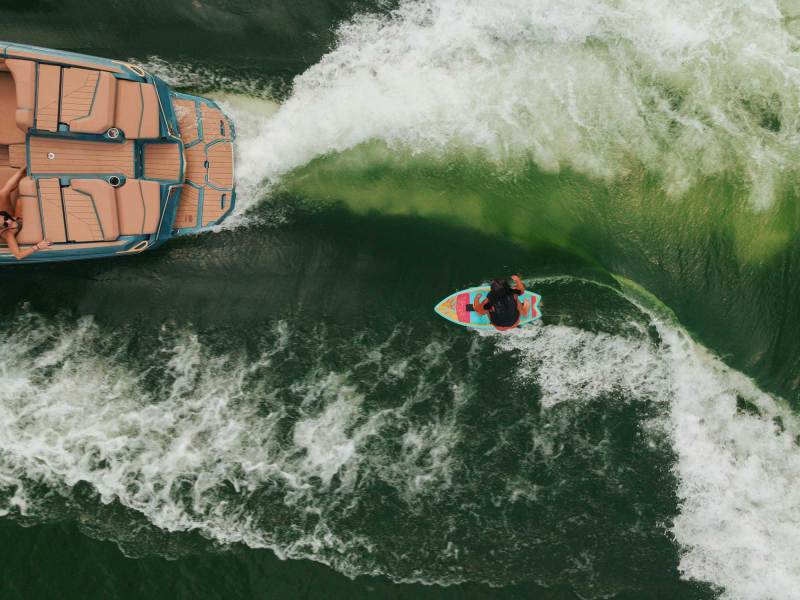
Built for Riders Who Move
Traditional flotation has often required a tradeoff: more protection and buoyancy versus comfort and unrestricted movement. Level 50 buoyancy aids are designed to close that gap.
A purpose-built Level 50 wake sports PFD could provide:
- A lower-profile design that reduces bulk
- Greater freedom for spins, grabs, and aerial tricks
- Improved comfort during long riding sessions
- Flotation designed for active watersports
For riders who spend hours behind the boat, comfort can make a major difference. A PFD that is easier to wear is a PFD riders are more likely to keep on.
Who Should Wear a Level 50 Buoyancy Aid?
Level 50 buoyancy aids are designed for experienced swimmers in protected waters where rescue is nearby. Unlike higher-buoyancy life jackets, Level 50 devices generally are not designed to turn an unconscious person face-up in the water.
The ideal user is a confident swimmer participating in wakeboarding, wake surfing, waterskiing, and other active watersports in controlled environments. They are not recommended for poor swimmers, non-swimmers, or situations where help may be far away.
Level 50 is a standard, not a design. That means Level 50 buoyancy aids will soon be available for all types of water sports, as well as general boating, fishing and paddling.
The Wear Requirement Still Applies
A Level 50 buoyancy aid only counts toward carriage requirements when it is being worn. Simply carrying one onboard does not satisfy the requirement.
When Will Level 50 Wake Vests Arrive?
Level 50 PFDs are not yet available in the United States. Manufacturers are developing products under the new standard, with the first U.S. models expected for the 2027 boating season.
Frequently Asked Questions
What is a Level 50 PFD for wakeboarding?
A lower-profile PFD designed for active watersports, with at least 50 newtons (about 11 pounds) of flotation.
Is it a life jacket or buoyancy aid?
Technically it is a buoyancy aid.
Does it count as my required life jacket?
Yes, but only when worn.
Can kids wear one?
Yes, if appropriate for their swimming ability and activity.
The Future of Wake Sports Flotation
Level 50 buoyancy aids represent the next evolution in wake sports flotation by combining certified safety performance with a lighter, more athletic design that matches the way modern riders perform.