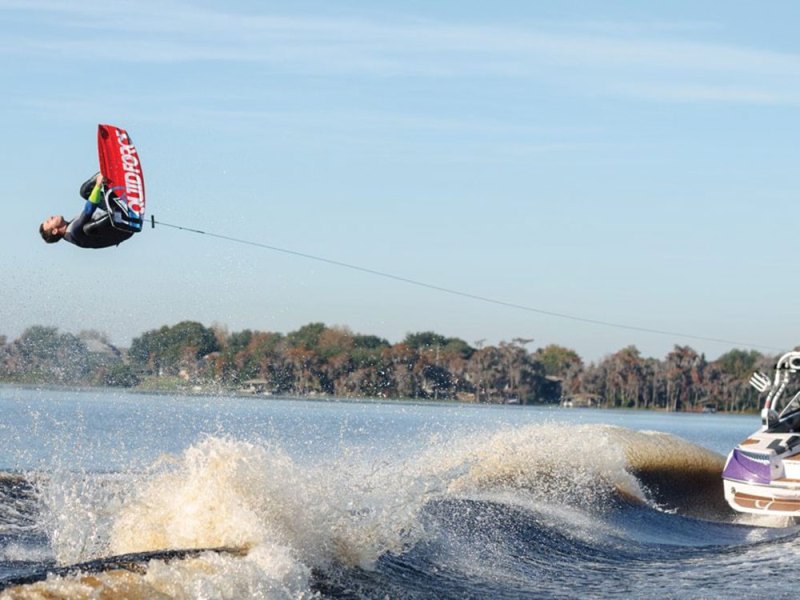
Wakeboarding is all about progression. Bigger airs, tighter spins and cleaner landings are part of the appeal. But the same forces that make the sport exciting also put considerable stress on a rider’s body. A few smart habits can help keep you progressing while spending less time on the sidelines.
Warm Up Before You Ride
It’s tempting to climb aboard, strap into your bindings and ask the driver to pull you up. Resist that urge. Cold muscles and stiff joints are less prepared for sudden loads, awkward landings and the rotational forces generated by a fall. Spend five to 10 minutes warming up with brisk walking, light jogging or jumping jacks, followed by dynamic movements such as arm circles, leg swings and controlled torso rotations.
Shoulders deserve particular attention. They’re heavily involved in handle control, edging and absorbing falls. Light resistance-band exercises can help activate the muscles that stabilize the shoulder joint.
Trying a trick beyond your ability is a common recipe for injury. Fatigue, poor technique and misjudged takeoffs can turn an ordinary session into a painful one. Master the fundamentals—balanced riding, controlled edging, wake approaches and consistent landings—before progressing to more demanding maneuvers.
Learn new tricks with a qualified coach when possible, and attempt them only when conditions, equipment and riding space are appropriate. If a trick repeatedly produces uncontrolled falls, step back and work on the underlying technique.
Protect Your Knees and Ankles and Shoulders
Wakeboarders’ lower extremities take a beating during hard landings. Landing with stiff legs can transmit substantial force through the ankles, knees and hips. Instead, aim for a balanced stance with knees flexed, allowing the legs to absorb impact. Keep your weight centered over the board and avoid letting your knees collapse inward.
Bindings should fit securely without creating painful pressure points or restricting circulation. Don’t assume tighter is always better. Check that the board, bindings and hardware are in good condition before every session.
Shoulder injuries can occur when a rider catches an edge, loses control of the handle or falls with an arm extended awkwardly. Maintain a relaxed grip and avoid using the handle to brace a fall. Shoulder-strengthening exercises that target the rotator cuff and shoulder-blade stabilizers can help build resilience, although no exercise program eliminates injury risk.
If you experience shoulder pain, weakness, instability or reduced range of motion, stop riding and seek medical advice rather than trying to work through it.
A properly fitted, wakeboarding-appropriate life jacket is essential. It should be designed for the activity, fastened correctly and free of damage. A wakeboarding helmet can help reduce the risk of head injuries, particularly at cable parks, around obstacles or when learning new tricks. Follow facility rules and choose equipment designed for the conditions in which you’re riding.
A helmet does not prevent every concussion, and even a seemingly minor head impact deserves attention. If a rider loses consciousness, becomes confused, develops a worsening headache or experiences vomiting after a head impact, seek emergency medical care. Anyone suspected of having a concussion should stop riding and not return until medically cleared.
Read Next: Trampoline Training
Know When to Call It a Day
Fatigue is an injury risk that often gets overlooked. As concentration and coordination decline, timing suffers and falls become more likely. Heat, dehydration and inadequate recovery can compound the problem. Drink water regularly, take breaks and avoid riding when exhausted, overheated or impaired by alcohol or drugs.
Pay attention to pain, too. Persistent soreness, swelling, instability or difficulty bearing weight warrants medical evaluation. Don’t let the desire for one more set override common sense.
Wakeboarding rewards commitment, but longevity depends on judgment as much as athleticism. Warm up, progress methodically, use appropriate protection and recognize when your body has had enough. The best ride of the day is the one that leaves you eager—and healthy enough—to do it again tomorrow.