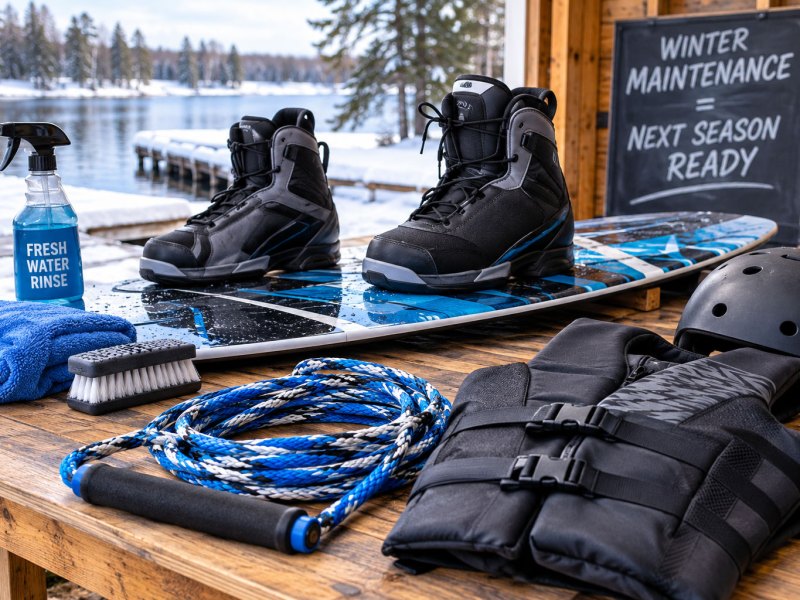
The last ride of the season deserves a little extra attention. After months of hard cuts, wake jumps, deep-water starts and long afternoons behind the boat, your wakeboarding equipment has earned some offseason care. A few hours of cleaning, inspection and proper storage now can prevent damaged gear, unpleasant surprises and unnecessary expense when spring rolls around.
Start With a Good Cleaning
Begin with the wakeboard itself. Rinse it with fresh water to remove lake residue, sand, sunscreen and other contaminants. Saltwater riders should be especially thorough because salt can accelerate corrosion on metal hardware. Use mild soap where necessary, then dry the board completely with a soft towel. Avoid harsh solvents and abrasive cleaners that can damage graphics, finishes or traction pads.
Inspect the base, rails, edges and topsheet for cracks, deep gouges, chips or signs of delamination. Marine epoxy, such as Solarez, can be used to fill chips and gouges, Check the fins for damage and make sure their mounting screws are secure. Remove the bindings and inspect the inserts and mounting hardware, looking for corrosion, stripped threads or damaged screws. A loose binding is more than an annoyance; it can compromise control when riding.
Give Boots Some Attention
Bindings take considerable abuse, particularly during hard landings and repeated starts. Inspect liners, footbeds, laces, straps, buckles and BOA closures for wear. Check the chassis for cracks and make sure all fasteners operate properly. Clean away dirt and debris, then allow the boots to air-dry completely. Remove liners and footbeds if the manufacturer permits it. Store bindings loosely fastened so they retain their shape, and avoid placing heavy equipment on top of them.
Don’t Overlook the Rope
A wakeboard rope and handle are safety equipment, not disposable accessories. Run the rope through your hands, looking for fraying, cuts, discoloration, flattened sections or other signs of deterioration. Examine handle grips, end connections and stitching. Rinse away dirt and salt, then let the rope dry completely before loosely coiling it. Avoid tight knots, sharp bends and direct sunlight. Ultraviolet exposure gradually weakens rope fibers, even when damage isn’t immediately obvious. Replace questionable ropes rather than gambling on another season.
Protect the Rest of Your Kit
Wash life jackets according to their care labels, inspect zippers, buckles and stitching, and hang them to dry. Check wetsuits, gloves and neoprene accessories for tears and damaged seams. Rinse, dry thoroughly and store them away from sunlight and heat. Inspect helmets for cracks, damaged straps or compromised padding.
Read Next: Basic Wakeboat Engine Maintenance
Choose the Right Storage Spot
Store boards in padded bags or racks, supported evenly and protected from accidental impacts. Keep them somewhere cool, dry and out of direct sunlight. Don’t leave equipment in a damp boat locker, freezing shed or hot attic. Never pack wet gear into a sealed bag.
Finally, make a replacement list. Order new fins, hardware, ropes or bindings now rather than discovering a problem on the first warm Saturday of spring. Your equipment has carried you through a season of fun. Return the favor, and it’ll be ready to ride again.