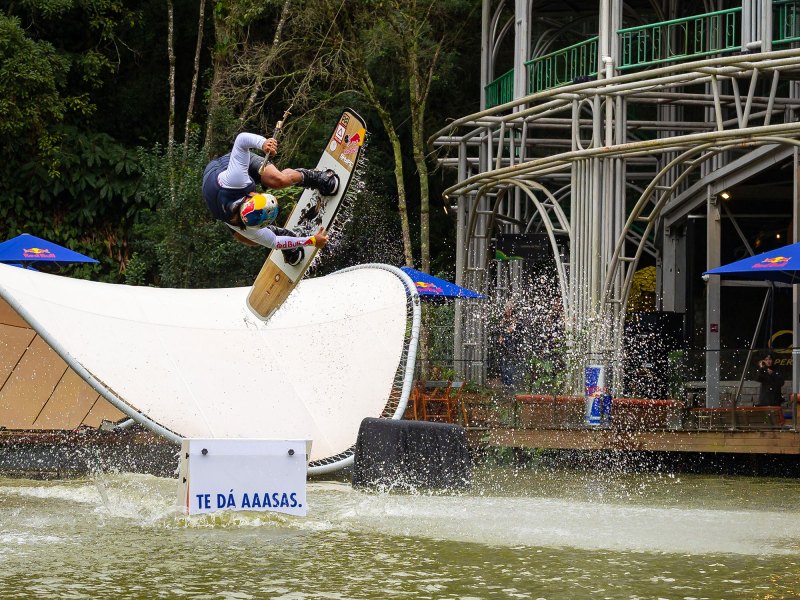
Some wakeboard events are about scores. Others are about style. The Red Bull Winch Sessions in Curitiba, Brazil, were about something even bigger: seeing the city through a wakeboarder’s eyes.
For a few unforgettable days, Curitiba’s urban landscape became a playground of rails, walls, ledges, gaps, and flowing water features as riders transformed everyday architecture into a canvas for creativity. It was the latest chapter in winch wakeboarding’s ongoing evolution—a discipline where imagination matters just as much as technical ability.
Unlike traditional boat riding or cable park competitions, winch sessions thrive on unpredictability. Riders are constantly adapting to new terrain, building custom features, and finding lines where most people see obstacles. The result is a blend of wakeboarding, street skateboarding, and urban exploration that feels raw, spontaneous, and refreshingly different.
Read Next: Cable Park Wakeboard vs. Boat Wakeboard
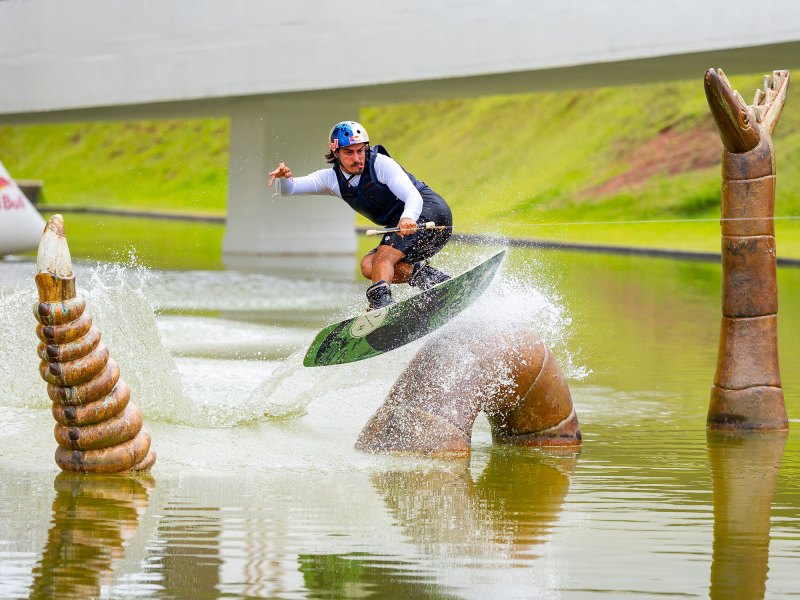
Curitiba proved to be an ideal backdrop. The city’s mix of waterways, modern architecture, and public spaces created endless opportunities for inventive setups. Every corner seemed to offer another possibility: a handrail begging to be boardslid, a concrete bank leading into water, or a gap that demanded commitment and precision.
Among the standout riders was Brazilian star Pedro Caldas (Instagram: @pedrowake), whose combination of technical mastery and effortless style has made him one of the sport’s most recognizable athletes. Caldas has built a reputation as one of the most versatile wakeboarders in the world, capable of excelling behind the boat, in cable parks, and in demanding winch environments. The Brazilian began riding at a young age and quickly emerged as one of the country’s top talents before earning international recognition.
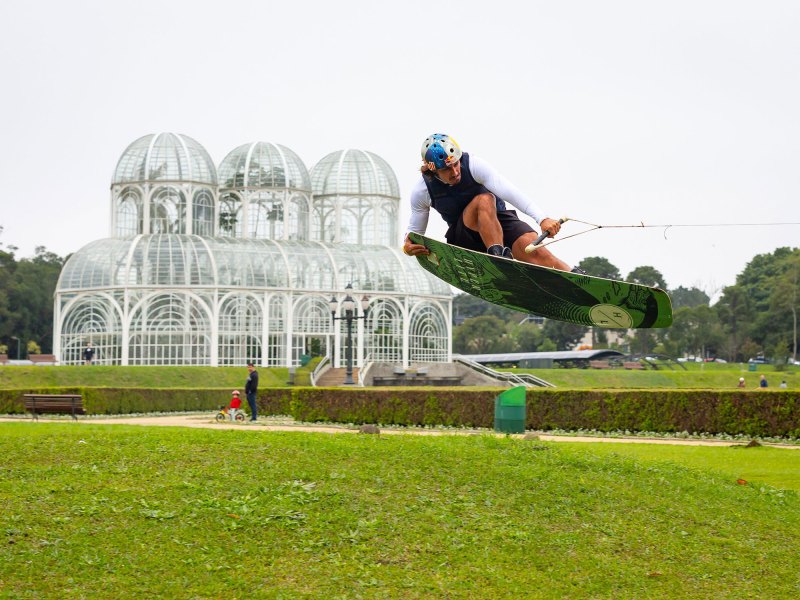
What makes Caldas particularly suited to projects like Winch Sessions is his creativity. In recent years, he’s become known for pushing wakeboarding into unconventional locations, including a groundbreaking Amazon adventure where he landed a Double Front Roll using a winch in the water-based city of Afuá, Brazil. The project showcased his willingness to take the sport beyond traditional venues and into environments that challenge both rider and equipment.
That same spirit was on full display in Curitiba.
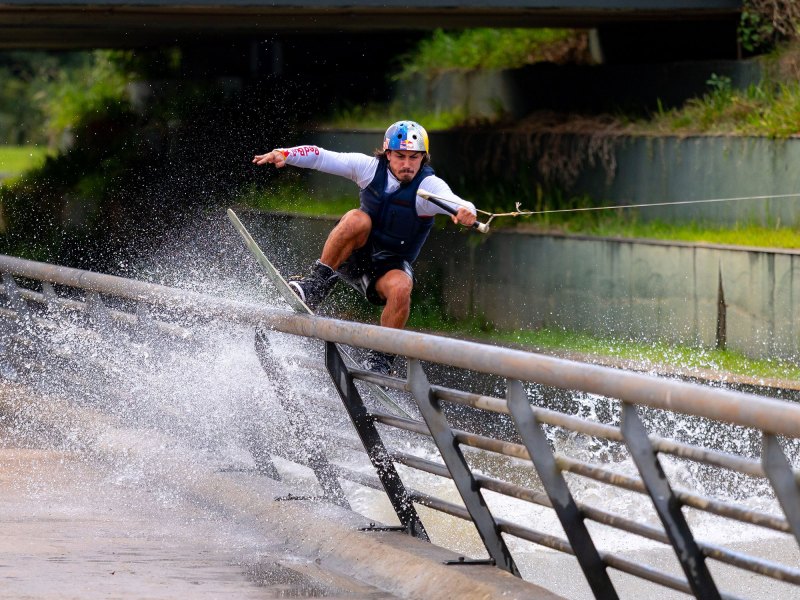
Throughout the sessions, riders attacked features that would never appear in a contest course. Precision became everything. Speed management, line choice, and timing often mattered more than sheer amplitude. Tricks that might seem routine on a cable became significantly more difficult when performed on temporary setups in changing urban conditions.
The beauty of winch riding has always been its accessibility and freedom. With a portable winch, a stretch of water, and enough imagination, nearly any location can become a wake spot. That’s why projects like Red Bull Winch Sessions continue to resonate with riders worldwide. They remind the wakeboarding community that progression doesn’t always happen inside the ropes of a competition venue.

As the sun set on Curitiba and the final clips were captured, one thing became clear: winch wakeboarding remains one of the most creative frontiers in action sports.
For Pedro Caldas and the rest of the crew, the city wasn’t merely a backdrop—it was the feature.
And for anyone watching, it was a reminder that the best wakeboard parks in the world aren’t always built. Sometimes they’re already there, hidden in plain sight, waiting for someone bold enough to ride them.
Enjoy these photos of Pedro Caldas.